Reviving the Past: The Strategic Value of Vintage Newspaper Digital Papers in Modern Creative Workflows
In an era dominated by high-resolution photography and hyper-realistic 3D rendering, there is a distinct and growing demand for authenticity. Professionals across design, marketing, and content creation are increasingly seeking ways to ground their digital projects in tangible history. This shift has propelled Scrapbook Digital Paper into a pivotal role within the creative economy. Specifically, collections derived from vintage media, such as old newspapers, offer a unique texture and narrative depth that stock imagery often fails to provide.
The intersection of nostalgia and modern technology has created a robust market for assets that bridge the gap between the analog past and the digital present. For entrepreneurs, freelancers, and enthusiasts, these digital resources are not merely decorative; they are strategic tools that enhance brand storytelling and project aesthetics.
Defining the Asset: More Than Just Backgrounds
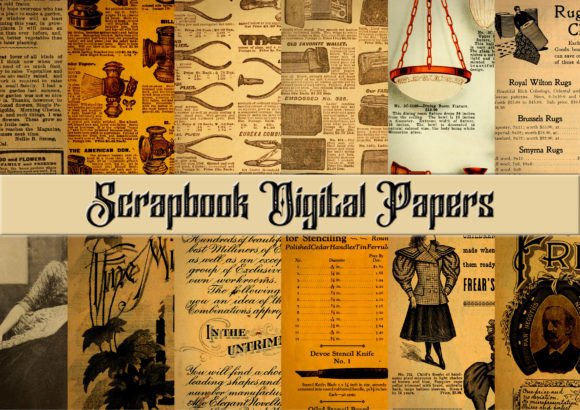
At its core, Scrapbook Digital Paper refers to high-fidelity digital textures designed to mimic physical materials. However, when this concept is applied to a set based on vintage newspaper motives and art, it transcends simple background utility. It becomes a repository of historical typography, layout structures, and visual noise that evoke a specific era.
Consider a set comprising 12 files, each measuring 12 x 12 inches at 300 dpi in JPG format. These specifications are not arbitrary; they represent a commitment to professional-grade quality. A resolution of 300 dpi ensures that whether the asset is used for a small business card or a large-format wedding invitation, the output remains crisp and free from pixelation. The inclusion of motives and art directly extracted from old newspapers provides a level of provenance that generic "grunge" textures cannot match. Users receive authentic halftone patterns, period-specific headlines, and faded ink effects that tell a story before a single word of copy is read.
The Convergence of Trends: Why Now?
The surge in popularity of these digital assets aligns with several converging industry trends. First, the "Slow Living" movement and the resurgence of analog hobbies have driven consumers to seek products that feel handmade and curated. In the digital realm, this translates to a preference for assets that carry the imperfections of the physical world. Scrapbook Digital Paper satisfies this craving by bringing the tactile feel of newsprint into the screen.
Secondly, for marketers and entrepreneurs, differentiation is paramount. In a saturated digital landscape, brands are looking for ways to stand out without relying on expensive custom photography. By incorporating vintage newspaper elements, businesses can instantly signal heritage, trustworthiness, and timelessness. This is particularly effective for sectors like artisanal food production, boutique hospitality, and independent publishing, where the narrative of "craftsmanship" is central to the value proposition.
Furthermore, the rise of remote work and the gig economy has empowered freelancers to deliver high-end results with minimal overhead. A designer no longer needs to spend hours scanning physical archives or creating complex vector illustrations to achieve a vintage look. A pre-curated set of 12 digital papers allows for rapid prototyping and efficient workflow management. This efficiency is crucial for professionals who must balance creativity with strict client deadlines.
Practical Applications Across Industries
The versatility of these digital assets makes them applicable across a wide spectrum of creative disciplines. Their utility extends far beyond traditional scrapbooking, which was their original domain. Today, they serve as foundational elements in diverse commercial and personal projects.
Digital Marketing and Brand Identity
For web designers and social media managers, these papers offer instant mood setting. Imagine a landing page for a craft brewery or a bakery using a vintage newspaper texture as a header background. The juxtaposition of modern UI elements against a backdrop of 19th-century print creates a compelling visual hierarchy. Similarly, for logo design, integrating these textures can add weight and character to a brand mark, making it memorable and distinct from the clean, flat designs prevalent in tech startups.
Event Planning and Hospitality
Wedding planners and event coordinators are increasingly adopting a "rustic chic" aesthetic. The use of Scrapbook Digital Paper in this sector is transformative. Invitations, place cards, and seating charts printed on or designed with these vintage motifs create an immersive experience for guests. The 12 x 12 inch size is perfect for designing full-page layouts that can be easily resized for digital invitations or sent to professional printers for physical stationery.
E-commerce and Product Packaging
Entrepreneurs selling handmade goods face the challenge of packaging that reflects the quality of their product. Decoupage techniques allow creators to apply these digital images onto boxes, jars, and furniture. Whether it is wrapping paper for a birthday party or the hardcover design for a self-published journal, these textures add a layer of sophistication. They transform a standard cardboard box into a branded artifact that customers are eager to share on social media.
DIY and Personal Projects
For the enthusiast, the appeal lies in customization. Planners, journals, and stickers are massive markets where personalization drives sales. Using a set of 12 files allows a creator to build a cohesive collection. One paper might feature bold headlines for a planner cover, while another offers a subtle grid pattern for daily logs. The ability to mix and match these motives enables users to create unique products without needing advanced graphic design skills.
Technical Considerations and Workflow Integration
To maximize the value of these assets, creators must understand how to integrate them into their existing workflows. The JPG format offers broad compatibility with almost all design software, from Adobe Photoshop and Illustrator to Canva and Affinity Designer. However, the true power lies in the layering capabilities. Because these are high-resolution scans of real media, they contain subtle variations in ink density and paper grain.
Professionals can utilize blending modes to soften these textures, ensuring they complement rather than overpower the primary content. For instance, overlaying a vintage newspaper texture at low opacity can give a modern photograph a timeless, editorial feel. Conversely, using the text-heavy portions of the papers as masks for images can create sophisticated collage effects. The 300 dpi resolution ensures that these manipulations do not degrade image quality, allowing for both screen-based and print-ready outputs.
The Future of Analog-Inspired Digital Assets
As we move further into a digital-first future, the desire for the tactile will only intensify. We are witnessing a cultural pendulum swing where the more digital our lives become, the more we crave the sensory experience of the physical world. Scrapbook Digital Paper serves as a conduit for this desire. It allows creators to preserve the aesthetic of the past while leveraging the speed and flexibility of modern technology.
This trend suggests a future where digital assets are not just functional but deeply evocative. As AI-generated imagery becomes more common, the value of human-curated, historically accurate textures will likely increase. Authenticity becomes a premium commodity. By utilizing sets derived from actual old newspapers, creators ensure their work possesses a lineage and a soul that algorithmic generation cannot replicate.
Conclusion
The integration of vintage newspaper-inspired digital papers represents more than a stylistic choice; it is a strategic decision that enhances the perceived value of creative work. For professionals, entrepreneurs, and hobbyists alike, these assets offer a versatile toolkit for storytelling. From crafting bespoke invitations to building a brand identity that resonates with history, the applications are limitless.
By embracing Scrapbook Digital Paper, creators can tap into a rich vein of visual language that speaks to universal themes of memory, tradition, and craftsmanship. Whether used for jewelry tags, decorated furniture, or digital marketing campaigns, these 12 files provide the foundation for projects that are not only visually stunning but emotionally engaging. In a world of fleeting trends, the enduring appeal of the printed word remains a powerful force, ready to be reimagined through the lens of modern design.